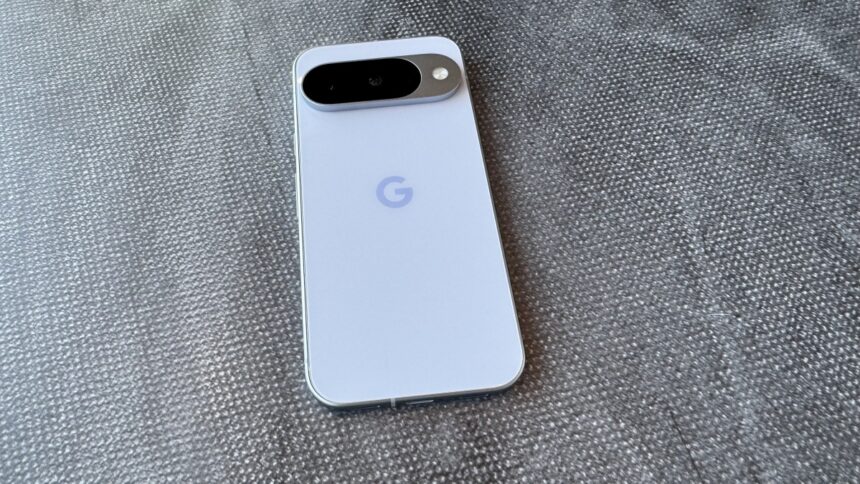
Is the Pixel 10 a Step Back in Camera Quality?
It’s often accepted that newer smartphones improve on their predecessors, offering enhancements in processing speed, display size, and camera capabilities. However, the situation surrounding the Pixel 10 appears to offer a contrarian view.
While Google has made a splash by introducing a telephoto lens in the standard Pixel 10 model, they’ve also reduced the quality of the ultra-wide and wide lenses. Depending on individual photography needs, this alteration could turn the Pixel 10 into a regression rather than an upgrade.
Comparing the Camera of Pixel 10 with Pixel 9
At first glance, the Pixel 10’s rear camera seems to align with contemporary smartphone standards, as Google has equipped all Pixel 10 variants with a triple-camera setup—something that was previously exclusive to Pro models. However, this enhancement comes with the trade-off of a slightly lower megapixel count in the base model’s main sensor. While minor reductions like these are commonplace, they cast a shadow over the Pixel 10’s stand against its predecessor, especially regarding certain camera features.

The current main lens on the Pixel 10 registers at 48 MP, down from the Pixel 9’s 50 MP. While the lower resolution might raise eyebrows, enhancements such as larger sensor size and aperture could offset this reduction. Until tested, any final judgments on the camera’s performance will have to wait, but the modernized ultra-wide lens raises immediate concerns.
The ultra-wide lens on the Pixel 10 is now just 13 MP, significantly reduced from the Pixel 9’s 48 MP offering. This change not only affects image quality but also narrows its maximum field of view from 123 degrees to just 120 degrees—a noticeable downgrade for extensive shots.
The question arises: is this decrease justified considering the addition of the telephoto lens? The new telephoto feature, though only 10.8 MP, allows for a 5x optical zoom—an improvement over the previous model’s 2x. This means enhanced zoom capabilities, yet ultimately it hinges on how individual users capture images.
Understanding the Role of Ultra Wide Lenses
Ever found yourself unable to capture a scenic view or large group due to constraints in space? An ultra-wide lens is designed precisely for those situations, allowing photographers to fit more within the frame—triggered by the “0.5x” zoom option on most smartphones.
While the Pixel 10’s capabilities remain unknown until experienced firsthand, here’s a glimpse of the ultra-wide capabilities from the Pixel 9:

Credit: Michelle Ehrhardt

Credit: Michelle Ehrhardt
Comparatively, here are some shots taken with the iPhone 15 Pro’s 12 MP ultra-wide lens, illustrating how another brand approaches similar technology:

Credit: Michelle Ehrhardt

Credit: Michelle Ehrhardt
Drawing rigid comparisons between the Pixel 10 and its predecessors will yield insight regarding camera capabilities, especially for users focused on wide-angle shots in crowded spaces. Shutterbugs and travelers alike may want to consider what adjustments they might feel if they shift from the Pixel 9.
Is a Telephoto Lens Essential for You?
However, this isn’t a bleak story. The introduction of the telephoto lens on the Pixel 10 allows users to achieve an optical zoom of up to 5x and an AI-enhanced digital zoom reaching 20x—significantly better than the Pixel 9, which had a mere 2x optical zoom.
This enhancement shines on paper, but the 10.8 MP resolution remains modest compared to what users might expect. For instance, here are two examples of 2x optical zoom from the Pixel 9:

Credit: Michelle Ehrhardt

Credit: Michelle Ehrhardt
Further, comparisons can also be made against the 3x optical zoom from the iPhone 15 Pro:
Credit: Michelle Ehrhardt
Lastly, some examples of 8x digital zoom from the Pixel 9 illustrate the standard of AI-enhanced zoom options:

Credit: Michelle Ehrhardt

Credit: Michelle Ehrhardt
Utilizing machine learning techniques, the Super Res Zoom stands apart from conventional digital zooms, aiming for quality by collating data from various zoom levels. While Google’s Pro models are slated to employ more advanced AI features for image generation, knowing the limitations of digital zoom when compared to optical capabilities is crucial.
For those who often find themselves taking distant images, the Pixel 10 could present improved options owing to its upgraded telephoto capabilities.
Can Computational Photography Make Up for Hardware Limitations?
While having high-resolution components is essential for capturing quality images, computational photography can mitigate some hardware drawbacks. For instance, a smartphone may take a 0.5x image primarily using data from the ultra-wide lens but can also derive additional details from the wide lens for enhanced quality.
Google emphasizes that they’ve refined sensor processing in the Pixel 10, making claims that users may not notice significant quality differences between the earlier and newer ultra-wide lenses. However, personal engagement with the new lens is crucial for definitive assessments.
The Pixel 9 records ultra-wide images at a default resolution of 12.5 MP, meaning computation enhancements are already applied during standard use. This results in more detailed images than a camera using 13 MP natively. Furthermore, for users who want uncompressed images, acquiring RAW files allows for full 48 MP image quality, despite additional editing efforts.
When setting comparisons, it’s noted that images taken by the Pixel 9’s ultra-wide camera can still outperform imagery from the iPhone 15 Pro’s 12 MP sensor, indicating that this method may retain more complexity for a keen photographer.
Does the Pixel 10 Mark a Regression in Camera Quality?
Determining if the Pixel 10’s camera is a setback hinges on personal photography habits.
For those who frequently zoom in to capture intricate details from afar, the Pixel 10 offers distinct advancements in optical zoom.
Conversely, if wide-angle photography is your preference—whether it’s for group shots or scenic landscapes—the Pixel 10 could potentially underperform compared to the Pixel 9, particularly if you’re accustomed to processing RAW photos.
Unfortunately, a definitive response cannot be provided without considering user preferences and needs; in this scenario, newer might not guarantee better quality.