The Transformation of the Pixel 10 Pro Fold: An In-Depth Review
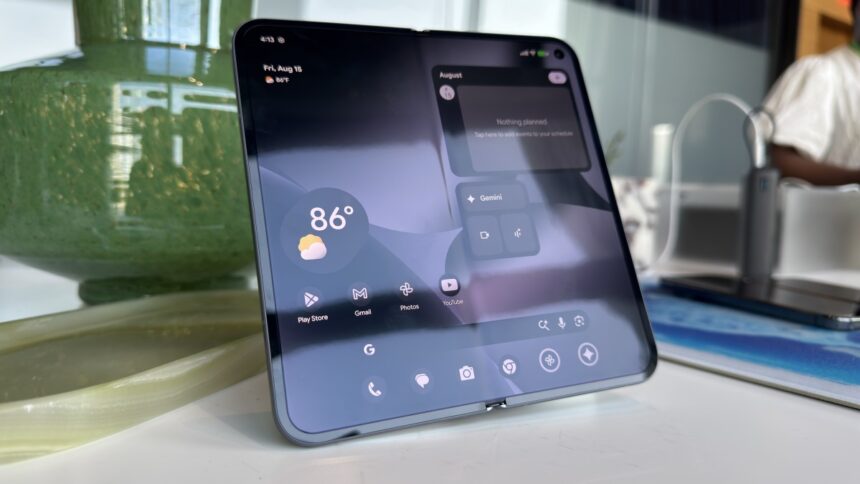
The recent launch of Samsung’s Galaxy Z Fold 7 has set a new benchmark for foldable smartphones, making the landscape thinner and more refined. This makes the similar appearance of the Pixel 9 Pro Fold and the newly unveiled Pixel 10 Pro Fold somewhat curious. At first glance, the latest model seems like a modest upgrade. However, upon closer inspection, it becomes clear that significant enhancements have been made across the board.
Unchanged Features

Credit: Michelle Ehrhardt
Starting with the elements that remain unchanged, there are fewer than one might expect. Perhaps the most notable disappointment is that the Pixel 10 Pro Fold retains the same dimensions and weight as its predecessor. Measuring 6.1 inches in height and 3.0 inches in width, it’s 0.4 inches thick when closed and 0.2 inches when opened. Although its weight of 0.57 pounds is manageable, it still feels bulkier compared to the sleek design of Samsung’s offering, which recently set a new standard. If extreme thinness is your priority, this phone may not meet your needs.
The internal memory remains identical to the previous model, with 16GB of RAM. Google has labeled the 48MP rear camera as “new,” but specifications suggest it mirrors the Pixel 9 Pro Fold’s camera system, consisting of a 48MP main sensor, a 10.5MP ultrawide, and a 10.8MP telephoto lens. After reaching out to Google for clarification, they maintained its new status—implying that while a lens replacement may have occurred, it isn’t necessarily more powerful.
New Features to Note
The Pixel 10 Pro Fold introduces significant upgrades worth discussing.
Enhanced Chip and Storage Options
Similar to the Pixel 10 and Pixel 10 Pro, the Pixel 10 Pro Fold integrates Google’s latest custom chip, the Tensor G5. This in-house development has a strong focus on power efficiency and artificial intelligence, although previous models were not renowned for their overall speed. The new G5 chip promises to be 60% more efficient in AI tasks and features a CPU that is 34% quicker overall.
This boost in computational power opens up the potential for more demanding applications, which aligns well with the introduction of a 1TB storage option, in addition to the existing 256GB and 512GB variants.
Larger, Brighter, and More Resilient Displays
Credit: Michelle Ehrhardt
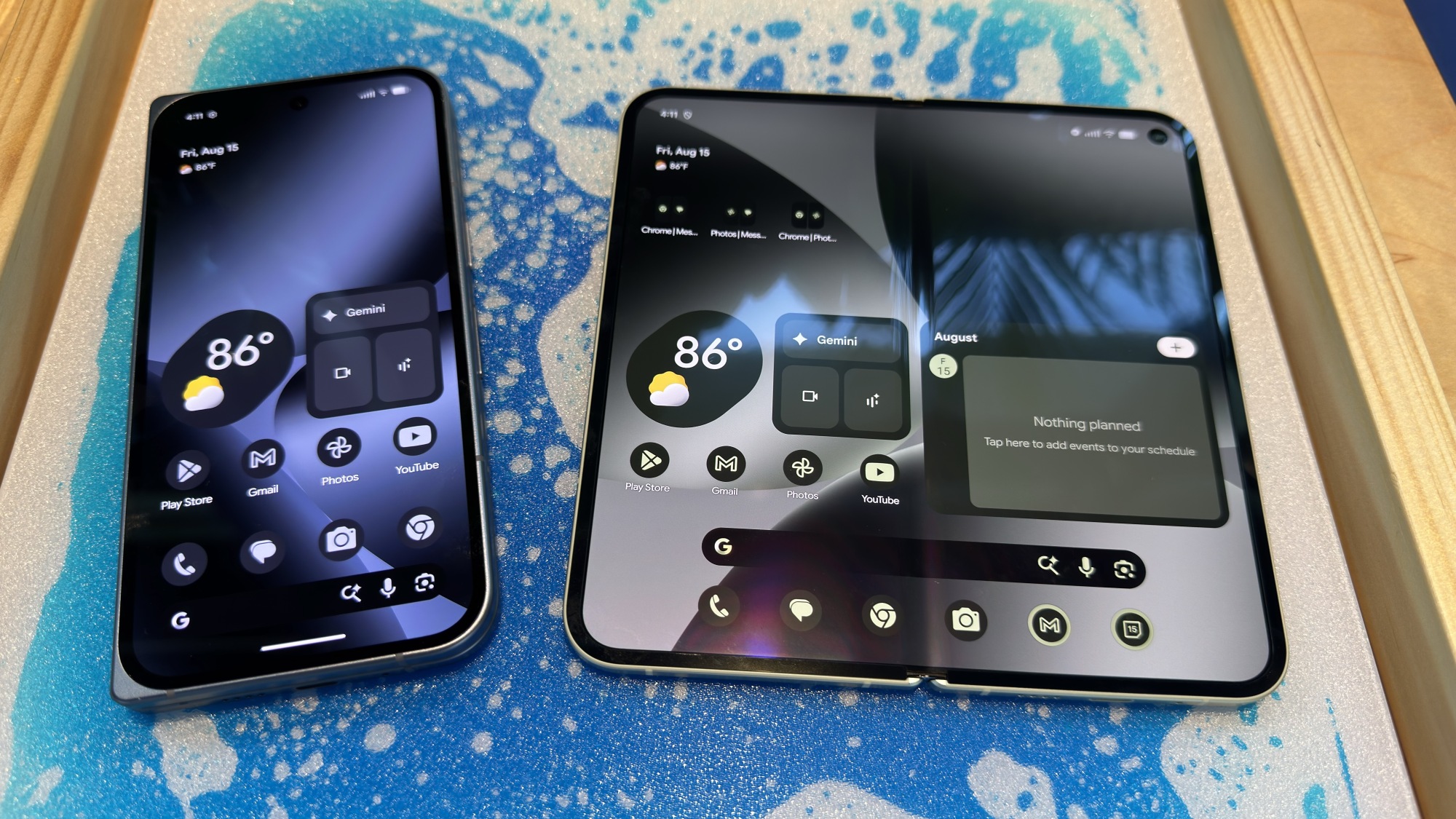
One of the most noteworthy enhancements in this iteration lies in the device’s screens. Although the primary internal display appears unchanged, there are notable improvements both in performance and durability.
In numerical terms, the exterior cover screen has increased slightly to 6.4 inches, as opposed to the 6.3 inches in the previous version. While its aspect ratio of 20:9 doesn’t quite meet the wider 21:9 standard seen in many non-foldable phones, reduced bezels enhance usability. Moreover, it now boasts a peak brightness of 3,000 nits, up from 2,700 nits in the last model, while maintaining a 120Hz refresh rate.
The internal screen remains at 8 inches with a 120Hz refresh, but it too has seen an improvement in peak brightness, now matching the 3,000 nits. Beyond these quantitative enhancements, Google has re-engineered the technology behind the internal display, making it more durable through the application of “ultra-thin glass and dual-layer anti-impact film.” Google assures that the new design can withstand 10 years of folding, a significant improvement over previous models. Additionally, the Pixel 10 Pro Fold has achieved an IP68 rating for dust and water resistance, a feature lacking in the Galaxy Z Fold 7 and essential for safeguarding against the common pitfalls of folding screens.
Enhanced Battery Life
In line with improvements seen in the Pixel 10 and Pixel 10 Pro, the Pixel 10 Pro Fold promises better battery life, projecting runtimes of approximately 30 hours compared to the previous 24-hour estimate. Individual usage will certainly affect actual performance, but the bigger battery capacity of 5,015 mAh versus the 4,650 mAh of the Pixel 9 Pro Fold is a promising sign. Fast charging capabilities are also on deck, allowing for a 50% charge in about 30 minutes with a 30W wireless charger, an upgrade from the 45W requirement for the earlier model.
Introducing Pixelsnap
A standout feature of the Pixel 10 Pro Fold is the introduction of Pixelsnap, Google’s take on MagSafe. This new tech, also debuting in the Pixel 10 lineup, utilizes Qi2 charging to allow compatible devices to magnetically attach for wireless charging at speeds of up to 25W, eliminating the need for adhesive rings.
In collaboration with various partners, Google is launching several Pixelsnap accessories, including a flat charger, a stand variant, and a unique Ring Stand that supports the phone in either portrait or landscape mode without providing charging functionality.
Software Enhancements
Beyond hardware improvements, Google has integrated various software upgrades, mostly centered around AI enhancements applicable to its range of devices. Specifically for the Pixel 10 Pro Fold, notable usability enhancements include a new split-screen mode allowing for flexibly adjustable app sizes and seamless file transfers across applications. Furthermore, select games like Asphalt Legends and Disney Speedstorm now support dual-screen functionality, where gameplay occurs on one half of the screen while the track map displays on the other.
Among the most practical is Instant View, enabling users to preview images immediately after taking them, a feature that enhances the photography experience dramatically.
Pricing and Launch Information

Credit: Michelle Ehrhardt
The Pixel 10 Pro Fold maintains the same starting price as the Pixel 9 Pro Fold, set at $1,799, and will be available in two colors: Moonstone gray and Jade lime. Pre-orders are currently open, but unlike its counterparts, the Pixel Pro Fold won’t officially launch until October 9. Orders can be made directly through Amazon, Best Buy, and Google itself.